Teaching Indian Classical Music in School Without Killing the Joy
A contributing voice from child development | Specialist in curriculum, pedagogy, and school leadership
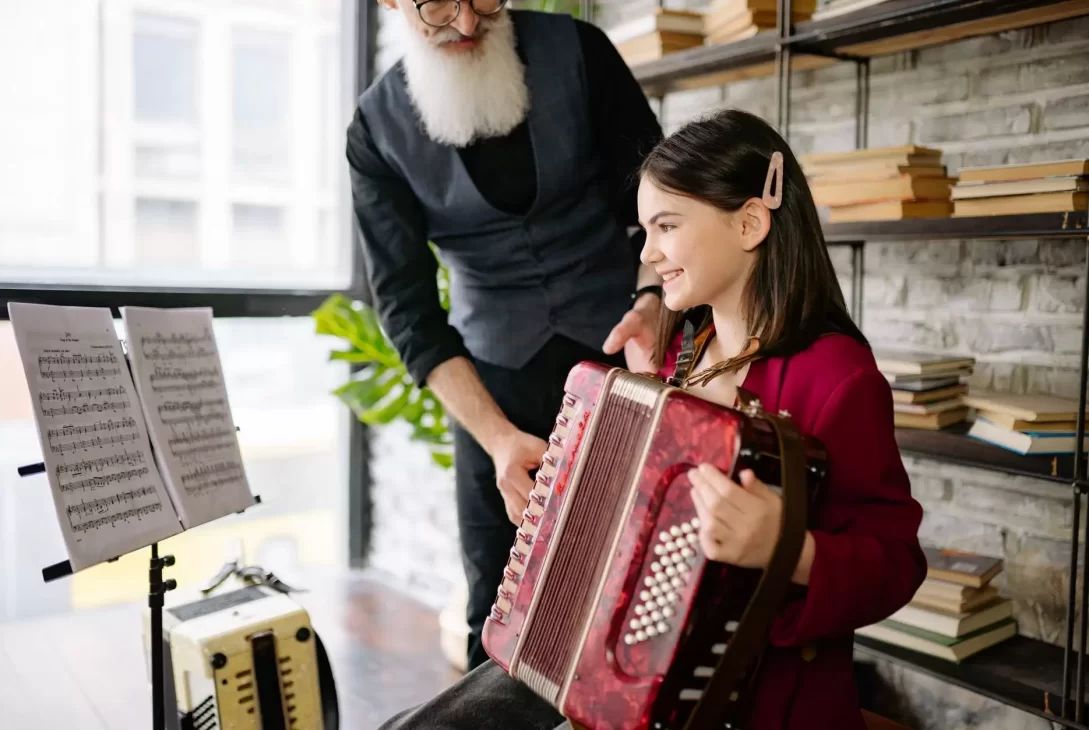
Indian classical music is among the world’s most sophisticated musical traditions, and teaching it well in a school setting means navigating a real, specific tension: the tradition’s own historical pedagogy, the guru-shishya parampara, developed around years of immersive, one-on-one, oral transmission, not the group-based, limited-time, exam-structured format most schools actually operate within. Teaching this tradition without killing the joy means making deliberate, specific choices about what to prioritise from that inheritance, rather than either abandoning its depth or attempting to compress a years-long apprenticeship model into a weekly class period.
Key facts
- Indian classical music’s traditional pedagogical model, the guru-shishya parampara, developed around sustained, individualised, oral transmission over years, a fundamentally different structure from the group-based, time-limited format of a typical school music class. This mismatch, not a lack of skill or effort on a teacher’s part, is a genuine, structural source of the difficulty in teaching this tradition well in schools.
- Many popular and film songs draw directly on classical ragas, a well-established, commonly used pedagogical bridge: starting from a familiar film melody a student already enjoys and tracing it back to its underlying raga can build genuine engagement with classical structure before introducing more abstract raga theory directly.
- Research on talent development more broadly, including Benjamin Bloom’s influential study of how expertise forms across various domains, found a consistent pattern: early stages of skill development tend to be playful and informal, with technical rigour and formal structure introduced progressively later, rather than front-loaded from the very first lesson. This general pattern is relevant to sequencing Indian classical music instruction specifically, playful, rhythm- and melody-based engagement before formal raga and tala theory.
- A finding referenced in earlier research this session on music education generally is relevant here too: the strongest, most rigorous evidence does not support music training producing broad, general cognitive transfer to unrelated academic subjects. This means the case for teaching Indian classical music well should rest on the tradition’s own value, cultural transmission, skill and craft, genuine engagement, rather than on unproven claims about it boosting maths or reading scores.
The joy problem has a specific, structural cause
A weekly class period cannot replicate years of guru-shishya immersion, and treating a school music class as a compressed version of that traditional model, rushing toward technical correctness a student hasn’t had time to develop naturally, is a specific, identifiable way joy gets lost. The fix isn’t lowering standards; it’s sequencing the school version of this tradition differently from how the traditional model sequences it.
This distinction matters for how a music teacher plans a term. If the goal is to eventually build genuine technical understanding, the traditional model’s sequencing, technical foundations from the very start, sustained over years, is not simply infeasible in a school setting; per the broader research on talent development, it may not even be the most effective sequencing for a beginner regardless of setting. Starting with rhythm, melody, and genuine engagement, building technical formality progressively, is both more feasible in a school’s time constraints and more consistent with how expertise is generally found to develop.
Five principles for teaching this tradition well in a school setting
- Diagnose which specific stage a student or class is actually at, playful engagement, developing technical foundation, or refinement, rather than assuming everyone should be taught with the same level of formal rigour from day one. Bloom’s talent-development research specifically finds early playful engagement precedes formal technical structure in how expertise tends to form.
- Use familiar film or popular music as a genuine bridge into classical structure, not a distraction from it. Since many popular songs draw directly on classical ragas, starting from what a student already enjoys and tracing the underlying structure is a real, substantive teaching technique, not a dilution of the tradition.
- Build the relationship the traditional guru-shishya model relies on, even within a group class’s time constraints. Individual attention, feedback, and connection remain relevant even when a full one-on-one apprenticeship isn’t feasible; a teacher who knows each student’s specific progress and interest is doing something closer to the tradition’s own model than one running a purely uniform, whole-class curriculum.
- Avoid justifying this content through unproven claims about general cognitive benefits. Since the strongest available evidence doesn’t support broad transfer claims for music training generally, the case for teaching Indian classical music rests more durably on its own cultural and artistic value than on borrowed claims about academic score improvements.
- Start with rhythm and melody-based engagement before formal raga and tala theory, sequencing a school introduction to this tradition to match how skill development is generally found to progress, playful and informal first, technical formality building progressively, rather than compressing years of traditional pedagogy into an unrealistic timeline.
Frequently asked questions
Is it actually harder to teach Indian classical music in a school setting than other subjects, or does it just feel that way? There’s a real, structural reason: the tradition’s own historical pedagogy, the guru-shishya parampara, developed around years of individualised, immersive instruction, a genuinely different format from a group-based, time-limited school class, not simply a matter of teacher skill or student effort.
Does using film music to teach classical structure risk diluting the tradition? Not necessarily, and it’s a well-established practical technique: since many popular and film songs draw directly on classical ragas, using a familiar melody as a bridge to the underlying classical structure is a genuine teaching method, not a shortcut that avoids real engagement with the tradition.
Should Indian classical music be taught with full technical rigour from the very first lesson, to honour the tradition properly? The broader research on how expertise develops generally, including Bloom’s influential talent-development work, suggests otherwise: early playful, informal engagement tends to precede formal technical rigour in how skill actually develops, meaning a progressive sequence, not immediate technical formality, is both more feasible in a school setting and more consistent with how learning generally works.
Is there good evidence that learning Indian classical music improves academic performance in other subjects? The strongest available evidence on music training generally does not support broad, general cognitive transfer claims of this kind, referenced in earlier research this session. The case for teaching this tradition well rests more securely on its own artistic and cultural value than on unproven claims about boosting unrelated academic subjects.
What to do:
- Name one student in your class who seems most disengaged from formal classical technique, and write down one specific, familiar piece of music, a film song built on a classical raga, you will use as a bridge for them this week, not a general improvement, but a named action for a named child.
- Search DIKSHA or ask your Block Resource Coordinator for any resource specifically on teaching Indian classical music pedagogy in a school context. If nothing exists, note that gap; the absence of a resource is itself useful information.
- Spend five minutes this week observing whether your current teaching sequence introduces formal technical structure before or after building genuine, playful engagement, not teaching, just watching and noting.
- Tell one colleague about the guru-shishya versus classroom pedagogy tension, and discuss what a genuinely adapted, rather than compressed, version of that tradition would look like in your specific school’s time constraints.
- At the end of the week, ask yourself what you would try differently next week, and what you would look for, such as whether a student’s engagement with a familiar piece carried over into genuine curiosity about the underlying raga, to know whether it is working.
Note on sourcing: web search was unavailable during this session, so current, specific citations could not be verified live. The guru-shishya parampara’s traditional pedagogical structure and the use of film music as a bridge to classical raga structure reflect well-established, broadly known aspects of Indian classical music education. Bloom’s talent-development research is a well-known general framework in education research. The finding on music training and cognitive transfer draws on research conducted earlier in this same working session. A reader preparing this for publication should verify specific citations before treating them as fully sourced.
Support resources: NIPUN Bharat FLN assessment tools (via your state SCERT or DIET); NCERT teacher guides; Azim Premji Foundation open-access research; DIKSHA platform content in 36 languages; Tele-MANAS mental health helpline: 14416 or 1800-891-4416; CHILDLINE: 1098.