School of Educators

Blog Post

School of Educators > Administration
Corporal Punishment in Indian Schools: The Evidence, the Law, and Why It Persists

Corporal Punishment in Indian Schools: The Evidence, the

The Right to Education Act, 2009, explicitly prohibits physical punishment and mental harassment of students. Corporal punishment persists widely. Understanding
POCSO in Practice: What Schools Are Required to Know, to Do, and to Teach

POCSO in Practice: What Schools Are Required to

The Protection of Children from Sexual Offences Act, 2012, places specific obligations on schools and their staff. Most teachers are
The Child Who Arrives at Class I Without Words: Oral Language Development and Its Underappreciated Role

The Child Who Arrives at Class I Without

Children arrive at Class I with enormous differences in oral language development — and these differences predict reading and academic
What Playing Teaches: The Developmental Evidence for Unstructured Play in the Early Years

What Playing Teaches: The Developmental Evidence for Unstructured

Unstructured free play is disappearing from the lives of young Indian children — replaced by tuition classes, screen time, and
The Third Language Trap: How Early Language Policy Shapes — and Constrains — Children’s Educational Trajectories

The Third Language Trap: How Early Language Policy

Most Indian school children are required to learn three languages simultaneously by Class III or IV. The linguistic evidence on
The Long Shadow of the First Year: How Early School Experiences Shape Learning Trajectories

The Long Shadow of the First Year: How

What happens to a child in the first year of formal schooling shapes how they relate to school, learning, and
The Anganwadi as Classroom: Early Learning Quality and What Research Says About What Children Need at 3, 4, and 5

The Anganwadi as Classroom: Early Learning Quality and

India’s network of Anganwadi Centres is remarkable in its scale. What happens inside them — the quality of interactions between
The Stories Schools Tell and Do Not Tell: Curriculum Representation and the Child Who Cannot Find Themselves in the Textbook

The Stories Schools Tell and Do Not Tell:

A curriculum is a story about whose knowledge, history, and culture matter. When large groups of children cannot find themselves
Why Schools Have Libraries and Why Many of Them Do Not Work: Reading Culture and the Supply of Books

Why Schools Have Libraries and Why Many of

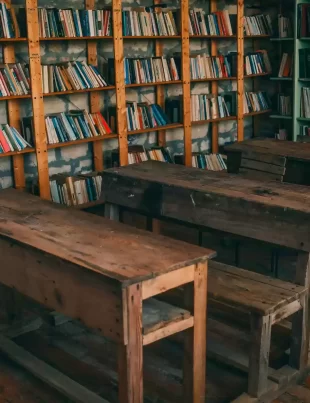
India has invested in school libraries for decades. Many of them are locked, unstocked, or stocked with books children cannot
Theatre in the Classroom: Drama, Role-Play, and the Development of Empathy and Language

Theatre in the Classroom: Drama, Role-Play, and the

Classroom drama is one of the best-evidenced and least-used pedagogical tools in school education. The research on what it does