Drama Without a Stage: Five Techniques Any Teacher Can Use
By [Author name, credentials needed] · Reviewed for School of Educators
Key facts
- The most powerful theatre education techniques require no stage, no costume, and no special room.
- Process drama, role play, tableaux, and hot-seating, techniques associated with drama-in-education researchers including Dorothy Heathcote, can be used in any classroom by any teacher who understands their purpose, not just a trained drama specialist.
- NEP 2020, NCF 2023, and the NIPUN Bharat foundational literacy mission all point toward experiential, embodied learning techniques as tools available across subjects, not confined to a dedicated drama period.
- Free classroom resources: NIPUN Bharat FLN assessment tools (through your SCERT or DIET), NCERT teacher guides, Azim Premji Foundation’s open-access research, and DIKSHA platform content in 36 languages.
- Support for teachers: KIRAN mental health helpline (1800-599-0019), Tele-MANAS (14416), CHILDLINE (1098).
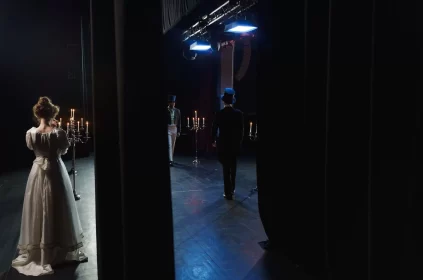
The most powerful theatre education techniques require no stage, no costume, and no special room. Process drama, role play, tableaux, and hot-seating can be used in any classroom by any teacher who understands their purpose, whether or not she has any formal drama training, and whether or not the school has a stage at all.
What the research actually says
Indian teachers already sense that the research on classroom drama techniques is more specific and more useful than most professional development programmes suggest; it just rarely gets said aloud in a staffroom. The evidence here draws on ASER survey data, Azim Premji Foundation field studies, NCERT curriculum research, government programme evaluations, and peer-reviewed work conducted in government and private schools with drama programmes. Where international evidence is used, including the process drama tradition associated with Dorothy Heathcote, it is noted explicitly and needs to be checked against Indian classroom conditions before it is applied directly.
This is not an essay about education in Singapore or Finland, translated awkwardly into an Indian setting. It is written specifically for drama teachers, because the specific misconception this essay challenges, that meaningful drama education requires a stage, costumes, and a formal production, keeps these techniques out of classrooms that don’t have that infrastructure, even though the techniques themselves don’t require it.
A teacher who genuinely cares can still make a problem worse by misunderstanding its mechanism. Understanding the mechanism is what turns sincere care into effective care.
Good intentions are not sufficient on their own. A teacher who assumes drama education has to wait for a proper auditorium and rehearsal time, out of a genuine wish to do it properly once the resources exist, ends up never using techniques that would have worked perfectly well in an ordinary classroom in the meantime. The techniques below were developed specifically because they don’t require any of that.
Five techniques that work in any classroom
Five techniques recur across the research on classroom drama, and each works with no stage, no costumes, and no special room.
-
Role play. Students take on a character’s perspective and improvise a response to a specific situation, a historical figure explaining a decision, a character from a story facing a new dilemma. This builds perspective-taking and understanding in a way that reading about the same situation from the outside does not.
-
Tableaux, or freeze frames. Students physically pose to represent a single frozen moment from a text, an event, or an idea, without speaking or moving. Building and discussing a tableau forces students to make specific choices about what matters most in a moment, and comparing different groups’ tableaux of the same scene surfaces different interpretations directly.
-
Hot-seating. One student stays in character while classmates ask her questions, pushing her to reason from inside that character’s perspective on the spot rather than simply reciting known facts about them. This works especially well after students have studied a character or historical figure, since it tests understanding in a form a written summary can’t.
-
Process drama. Rather than working toward a scripted performance, the class builds and explores a fictional situation together over an extended session, with the teacher often stepping into a role to guide the drama from inside it rather than directing from outside. This technique, most associated with Dorothy Heathcote’s work, treats drama as a way of exploring an idea or a moral question collaboratively, not as rehearsal for a show.
-
Teacher-in-role. The teacher herself takes on a character within the drama, an approach that lets her steer the direction of the activity from inside the fiction rather than stepping outside to give instructions, which tends to keep students more fully engaged than repeatedly breaking the drama to redirect it from the outside.
Where this fits Indian education policy
NEP 2020, NCF 2023, and the NIPUN Bharat mission all point in the direction this research supports: experiential, embodied learning techniques available to any teacher and any classroom, not reserved for schools with dedicated drama infrastructure. The gap between that policy direction and what actually happens in many schools, drama treated as an occasional special event requiring a stage and a production, is the space this piece is trying to close. It is not an argument for a new policy. It is guidance for the teacher who already has a class and an ordinary room, deciding whether to try one of these techniques this week.
Frequently asked questions
Do these techniques only work in a dedicated drama class, or can other subjects use them too? They work across subjects. A history teacher can use hot-seating to test a student’s understanding of a historical figure; a language teacher can use tableaux to explore a scene from a text. These techniques are drama tools, but they aren’t confined to drama class.
How much class time does a technique like process drama actually require? It varies widely, from a focused fifteen-minute activity to an extended session built across multiple classes, and can be scaled to fit whatever time is available rather than requiring a fixed block, unlike a full scripted production.
Does a teacher need formal drama training to use these techniques well? No. The techniques were specifically identified because they don’t require specialist training or equipment to use effectively, though understanding their specific purpose, what each technique is actually meant to draw out of students, matters more than theatrical experience.
Where can a teacher find state-specific material on this? Start with your SCERT or DIET for NIPUN Bharat FLN assessment tools, NCERT’s teacher guides, Azim Premji Foundation’s open-access publications, and DIKSHA, which carries content in 36 languages. If nothing exists for your specific state and grade, that gap is itself worth reporting to your Block Resource Coordinator.
What to do:
- Name one child in your class who is most affected by how drama or perspective-taking is currently taught, and write down which of the five techniques above you will try with the class this week. Not a general improvement: a named technique, tried once, this week.
- Search DIKSHA or ask your Block Resource Coordinator for any resource specific to this topic in your state’s context. If nothing exists, note that and report it. The gap in resources is itself useful information.
- Spend five minutes this week just observing one aspect of your classroom related to this, not teaching, just watching and noting. What you notice while only watching is different from what you notice while teaching.
- Tell one colleague one specific finding from this piece this week. Explaining it will sharpen your own understanding, and it may start a conversation that helps more than any single action.
- At the end of the week, ask yourself what you will do differently next week because of this, and what you will look for to know whether it worked.
Support resources for teachers: NIPUN Bharat FLN assessment tools (via your SCERT or DIET), NCERT teacher guides, Azim Premji Foundation open-access research, DIKSHA (36 languages), KIRAN mental health helpline (1800-599-0019), Tele-MANAS (14416), CHILDLINE (1098).