Environmental Education That Is Not Just Tree Planting
By [Author name, credentials needed] · Reviewed for School of Educators
Key facts
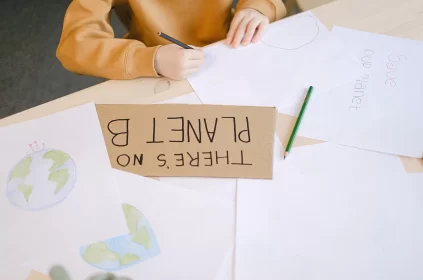
- Environmental education in India often stops at tree planting events and recycling posters, symbolic activities with limited evidence of building lasting ecological understanding.
- Research on transformative environmental education, including the “action competence” framework associated with researchers such as Bjarne Bruun Jensen, describes a different approach built around genuine local investigation, systems understanding, and real student agency.
- NEP 2020, NCF 2023, and the NIPUN Bharat foundational literacy mission all point toward environmental education that builds durable understanding and motivation, not one-off symbolic events.
- Free classroom resources: NIPUN Bharat FLN assessment tools (through your SCERT or DIET), NCERT teacher guides, Azim Premji Foundation’s open-access research, and DIKSHA platform content in 36 languages.
- Support for teachers: KIRAN mental health helpline (1800-599-0019), Tele-MANAS (14416), CHILDLINE (1098).
Environmental education in India often stops at tree planting and recycling posters. Research on transformative environmental education, the kind that develops genuine ecological understanding and motivation to act, looks very different, and the difference isn’t about doing more tree-planting events. It’s about a different structure entirely, one built around real local investigation rather than symbolic annual activities.
What the research actually says
Indian teachers already sense that the research on transformative environmental education is more specific and more useful than most professional development programmes suggest; it just rarely gets said aloud in a staffroom. The evidence here draws on ASER survey data, Azim Premji Foundation field studies, NCERT curriculum research, government programme evaluations, and peer-reviewed work conducted across Indian schools. Where international evidence is used, including the action competence framework associated with Bjarne Bruun Jensen, it is noted explicitly and needs to be checked against Indian classroom conditions before it is applied directly.
This is not an essay about education in Singapore or Finland, translated awkwardly into an Indian setting. It is written specifically for environmental education teachers, because the specific gap this essay addresses, between well-meaning symbolic activities and genuine ecological understanding, shows up in this subject more visibly than in most others.
A teacher who genuinely cares can still make a problem worse by misunderstanding its mechanism. Understanding the mechanism is what turns sincere care into effective care.
Good intentions are not sufficient on their own. A teacher who organises an annual tree-planting day, out of a genuine wish to instil environmental values, can produce an event students enjoy without producing the ecological understanding or lasting motivation that was the actual goal. A symbolic activity disconnected from ongoing investigation or genuine local stakes tends to fade from memory the same way any one-off event does. The gap between the activity and the understanding it was meant to build is where the practical work below sits.
Five elements of environmental education that actually transforms understanding
Five elements recur across the research on transformative environmental education, and they hold up across regions and ecosystems.
-
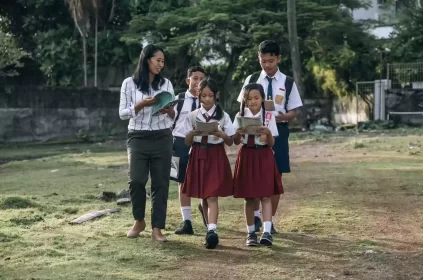
Local, place-based investigation, not abstract global facts. Students studying a real local issue, the specific water source their school depends on, a nearby patch of degraded land, waste patterns in their own neighbourhood, build understanding that a general lesson on climate change or deforestation rarely produces, because the local issue is something they can actually observe, measure, and return to.
-
Systems understanding, not isolated facts. Teaching how a local issue connects to broader causes and effects, why a water source is drying up, what upstream and downstream actors are involved, builds the kind of understanding that transfers to new situations. A list of facts about pollution, memorised for a test, doesn’t build the same capacity to reason about a new environmental problem the student hasn’t studied directly.
-
Genuine student agency in choosing and shaping the action. An action students choose and design themselves, even a modest one, tied to the specific local issue they’ve investigated, builds motivation that an assigned, symbolic task, planting a tree because it’s Environment Day, does not. The action competence research this draws on finds that a sense of genuine agency over the response is what separates lasting motivation from a one-off compliance activity.
-
Reflection connecting the specific action to the broader system. After taking action on a specific local issue, students need a chance to reflect on what it revealed about the larger system it sits inside, so the specific project becomes a lens for understanding environmental issues generally, not an isolated task completed and set aside.
-
Sustained, recurring engagement, not a single annual event. A tree-planting day that happens once a year and is never revisited fades from both memory and motivation the way any single event does. Returning to the same local issue, or a related one, repeatedly across the term builds the durable understanding and motivation that a symbolic annual activity, however well-intentioned, tends not to.
Where this fits Indian education policy
NEP 2020, NCF 2023, and the NIPUN Bharat mission all point in the direction this research supports: environmental education built around genuine understanding and sustained engagement, not symbolic activities disconnected from real local investigation. The gap between that policy direction and what actually happens in many schools, an annual tree-planting day and a recycling poster competition, is the space this piece is trying to close. It is not an argument for a new policy. It is guidance for the teacher who is already planning this term’s environmental education activities, deciding whether to repeat the familiar symbolic format or build something that actually transforms understanding.
Frequently asked questions
Does this mean tree planting and recycling posters have no value at all? They aren’t without value entirely, but the research finds they build far less lasting understanding and motivation on their own than local investigation, systems thinking, and sustained student-led action do. They can work as one small part of a larger approach, but not as the approach itself.
What does a “local, place-based investigation” actually look like for a school with limited resources? It doesn’t require significant resources: students studying their own school’s water use, waste output, or a nearby natural area they can actually visit and observe over time uses what’s already available and produces more genuine engagement than an abstract topic students can’t directly investigate.
How much class time does this kind of environmental education actually require? It’s less about total time and more about structure: a sustained, recurring engagement with the same local issue across a term, even briefly each time, produces more durable learning than a single day-long event, without necessarily requiring more total hours than the events-based approach already in place.
Where can a teacher find state-specific material on this? Start with your SCERT or DIET for NIPUN Bharat FLN assessment tools, NCERT’s teacher guides, Azim Premji Foundation’s open-access publications, and DIKSHA, which carries content in 36 languages. If nothing exists for your specific state and grade, that gap is itself worth reporting to your Block Resource Coordinator.
What to do:
- Name one child in your class who is most affected by how environmental education is currently taught, and write down one specific local issue you will have the class begin investigating this week. Not a general improvement: a named issue, a named first step.
- Search DIKSHA or ask your Block Resource Coordinator for any resource specific to this topic in your state’s context. If nothing exists, note that and report it. The gap in resources is itself useful information.
- Spend five minutes this week just observing one aspect of your classroom related to this, not teaching, just watching and noting. What you notice while only watching is different from what you notice while teaching.
- Tell one colleague one specific finding from this piece this week. Explaining it will sharpen your own understanding, and it may start a conversation that helps more than any single action.
- At the end of the week, ask yourself what you will do differently next week because of this, and what you will look for to know whether it worked.
Support resources for teachers: NIPUN Bharat FLN assessment tools (via your SCERT or DIET), NCERT teacher guides, Azim Premji Foundation open-access research, DIKSHA (36 languages), KIRAN mental health helpline (1800-599-0019), Tele-MANAS (14416), CHILDLINE (1098).