
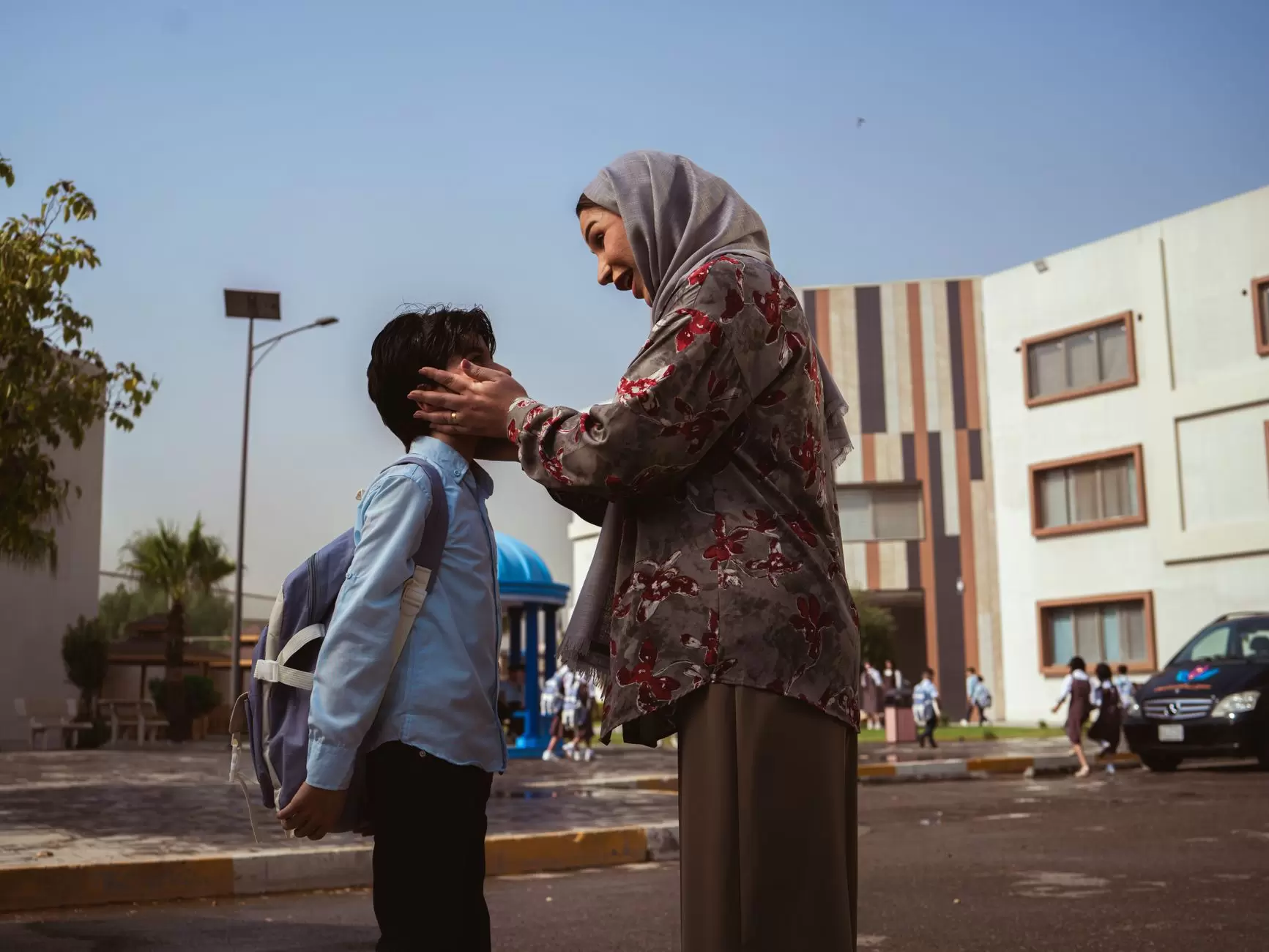
Why a Gondi-speaking child goes silent in an Indian classroom, and what mother-tongue education can fix
Multilingual education, the NEP 2020 mother-tongue policy, and what Odisha, Chhattisgarh, and Telangana got right
Prof. Suhasini Bhattacharya | Applied linguist and teacher educator, specialising in multilingual classrooms
When a four-year-old from a Gondi-speaking family in Chhattisgarh first walks into an Anganwadi, she already knows several thousand words. She can tell a story, ask a question, express displeasure and delight, negotiate with her siblings. Her mind is not empty. Her language is full and living, and it is the cognitive architecture on which everything else, literacy, numeracy, scientific thinking, will be built.
Then the teacher speaks in Hindi, or sometimes in English, and the child goes silent. Not because she has nothing to say. Because what she knows how to say is suddenly the wrong kind of knowing.
Key facts
- The 2011 Census recorded 19,500 distinct mother tongues in India, which linguists rationalised into 1,369 distinct languages. Schools teach in a small fraction of them.
- The National Education Policy 2020 explicitly calls for mother-tongue-based multilingual education in the early years. Implementation on the ground remains far behind the policy on paper.
- Odisha’s multilingual education programme built early-grade reading materials in tribal languages including Saura, Kui, and Juang, and trained teachers who were themselves native speakers.
- Global research across sub-Saharan Africa, South and Southeast Asia, and Latin America finds that children who learn to read first in their home language acquire literacy faster and outperform peers academically by the upper primary level.
The double task of learning in an unfamiliar language
Linguists call it a subtractive language environment: a school where the language of instruction replaces the home language instead of building on it. The pattern shows up consistently across contexts worldwide, and it is well documented, not speculative. A child taught content in a language she does not speak at home is handed two jobs at once, learning the language itself and learning through it. In the early years, both jobs tend to get done badly, not from any shortfall of intelligence but from a failure of design.
India’s language map versus its classroom map
India’s linguistic diversity is hard to overstate. The 2011 Census counted 19,500 distinct mother tongues, later rationalised into 1,369 separate languages. Schools teach in only a small slice of that number. The National Education Policy 2020 calls directly for mother-tongue-based multilingual education in the early years, a well-evidenced position backed by decades of research. What the policy has not yet solved is Tuesday morning: the distance between what NEP 2020 recommends and what actually happens once the school bell rings.
The silent ones in the back row
In many states, children who speak tribal languages, regional dialects, or minority languages arrive at school to find no teacher who speaks their home language, no textbook printed in it, and no accommodation built for their linguistic reality. The expectation, unspoken but constant, is that the child adjusts. Some children do, and their resilience is real. Many others quietly stop trying, becoming the silent ones in the back row, moved up a class every year without anyone recognising that the problem sitting in front of them is communicative, not cognitive.
Her mind is not empty. Her language is full and living, and it is the cognitive architecture on which everything else will be built.
What the global evidence shows
The case for mother-tongue-based multilingual education does not rest on sentiment. It rests on decades of research from dozens of countries. Studies across sub-Saharan Africa, South and Southeast Asia, and Latin America find, with real consistency, that children who receive their first literacy instruction in their home language learn to read faster, transfer that skill more effectively into a second language, and go on to post stronger academic results by the upper primary years. This is a cognitive and pedagogical finding, not a cultural preference dressed up as policy.
What India’s own states have tried
Some of the country’s most instructive programmes have come out of states with large tribal populations. Odisha’s multilingual education programme developed early-grade reading materials in several tribal languages, among them Saura, Kui, and Juang, while training teachers drawn from those same language communities to deliver them. Evaluations of the programme recorded measurable gains in early literacy.
Chhattisgarh has built instructional materials in Gondi and Halbi. Andhra Pradesh and Telangana have each run their own multilingual education programmes. All of these efforts carry the same hard lesson about scale: producing quality materials in any one language takes trained linguists, sustained community engagement, and real money, none of which arrives easily or stays funded for long.
What a teacher can do without waiting for new textbooks
Individual teachers in mixed-language classrooms are not powerless while the policy catches up. Research and practice both point to code-switching, letting children use their home language in class discussion and then helping them say the same thing in the medium of instruction, as a strategy the evidence strongly supports and the system routinely resists, largely because it still equates the school language with intelligence itself.
Bilingual word walls help. So does asking children to work out a key concept in their home language before writing it in the school language, and inviting parents or community members to speak in their own language during school activities. Each of these keeps a visible bridge between what a child already knows and what she is being asked to learn.
The single most effective shift may be the simplest: a teacher who treats a Gondi word as interesting rather than irrelevant, who asks a child to teach the class a phrase instead of correcting it out of existence, changes the emotional temperature of the whole room. NEP 2020’s mother-tongue policy will need years of implementation support, material development, and teacher training before it reaches every classroom. Until it does, every teacher in a linguistically diverse school makes a daily choice: treat a child’s home language as a resource, or treat it as a problem.
Frequently asked questions
How many languages are spoken in India, according to the 2011 Census? The Census recorded 19,500 distinct mother tongues, which linguists later rationalised into 1,369 separate languages. Indian schools teach in only a small fraction of these.
What is a subtractive language environment? It is a schooling setup where the language of instruction replaces a child’s home language instead of building on it. Children in these environments must learn a new language and learn academic content through it at the same time, which slows both.
What does NEP 2020 say about mother-tongue education? The National Education Policy 2020 explicitly recommends mother-tongue-based multilingual education for the early years of schooling. The policy is well supported by global research, but implementation at the classroom level remains far behind what the document describes.
Which Indian states have run multilingual education programmes for tribal languages? Odisha built early-grade reading materials in Saura, Kui, and Juang and trained native-speaking teachers to use them. Chhattisgarh has developed materials in Gondi and Halbi. Andhra Pradesh and Telangana have each run their own programmes.
What is code-switching, and why do linguists recommend it in classrooms? Code-switching means letting a child use her home language during class discussion and then helping her express the same idea in the school’s medium of instruction. Evidence supports it as a bridge between what a child already knows and what she is learning, though many schools resist it on the assumption that only the official language reflects real learning.
What to do:
- In the first week of the academic year, ask every child, and their parent if needed, what language they speak at home. Record this alongside the official enrolment data, not separately from it.
- Build a simple word wall in your classroom with key subject vocabulary in both the medium of instruction and any home language spoken by more than two or three children in the class.
- When a child uses a word from her home language in class, do not correct it. Ask her to teach the class that word, and talk through how it connects to the concept you are teaching.
- Check whether your state has mother-tongue-based multilingual education materials. Odisha, Chhattisgarh, Telangana, and Andhra Pradesh have all produced some. Request them through your District Resource Centre.
- If a child is consistently silent in class but is known to talk freely at home, consider that a language barrier, not shyness or low ability, may be the real explanation, and adjust your teaching to it.