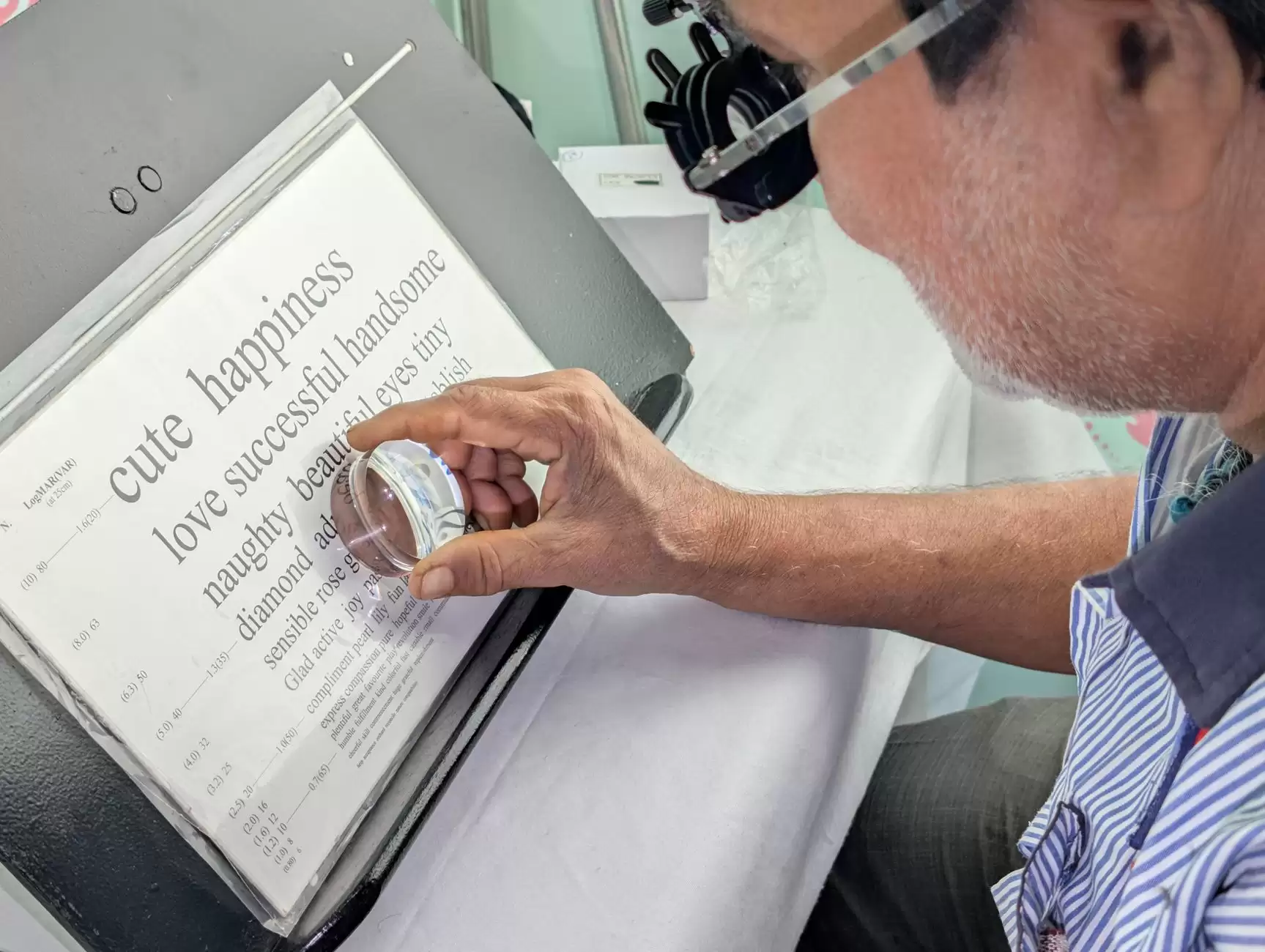
An unknown but significant number of children in Indian classrooms cannot see the blackboard or hear the teacher clearly. They are not diagnosed. They adapt — by sitting quietly, by copying from classmates. Eventually, many stop coming.
Dr Rajeev Pillai | Public health ophthalmologist with experience in school health programmes
This is one of the under-discussed but important challenges in Indian school education. Research and policy evidence point to a significant gap between official commitments and the lived experience of children in the average government school.
The issue affects a substantial number of children, with evidence drawn from national surveys including ASER, UDISE+, and peer-reviewed research. The consequences are documented across multiple studies and are of direct relevance to teachers, headmasters, and school communities.
Understanding this problem requires looking honestly at the ground truth — the Tuesday-morning reality that differs from the official narrative. The evidence base for understanding both the problem and effective responses is robust, drawn from Indian and international research.
Across India, teachers and schools that have engaged seriously with this challenge have found practical pathways that make a real difference for children. The research points consistently to approaches that are within reach of individual schools and educators, often without additional resources.
The children most affected are frequently from the most marginalised backgrounds — those for whom the school system should be working hardest, and for whom it most often falls short. Understanding the specific mechanisms through which the problem operates is essential for designing effective responses.
Evidence from well-studied programmes and from the experience of high-performing schools suggests that meaningful improvement is possible within existing constraints. The key is the quality of attention, relationship, and professional practice that teachers and headmasters bring to the problem.
The ground truth of this challenge — what actually happens on a Tuesday morning — differs significantly from the official account, and it is this gap that teachers and headmasters are best placed to close.
The research on effective responses to this challenge is consistent in identifying several elements that recur across successful programmes. These elements are within reach of individual schools and teachers, and do not require systemic change to begin implementing.
First, accurate identification of which children are most affected and what specifically they need. Generic responses often miss the children who need the most targeted support. A teacher who knows which specific children are most affected by this challenge is in a far stronger position to help them than one who is responding to the issue in aggregate.
Second, school-level practices that address the problem directly, rather than waiting for system-level solutions. The research consistently shows that school and classroom-level responses, implemented well and sustained over time, produce meaningful improvements even when systemic conditions remain unchanged.
Third, community and family engagement. The evidence on responses that involve families and communities alongside school-based action consistently shows better outcomes than school-only approaches. For many challenges, the school alone cannot provide everything the child needs.
Fourth, professional development and support for teachers. The evidence on what produces lasting change in teaching practice is clear: sustained, school-based, collaborative professional learning is far more effective than episodic training. Teachers who have opportunities to learn from and with each other improve more rapidly and more sustainably.
The most important single step any school can take is to begin — to notice the problem, to acknowledge it honestly, and to take one specific, concrete action this week. The research on school improvement consistently finds that the schools that improve are those that begin, not those that wait for perfect conditions.
WHAT TO DO ON MONDAY
- This week, assess honestly whether this issue is present in your school and which children are most affected — specific identification is the foundation of effective response.
- Share what you find with the headmaster and propose one concrete action within the school’s existing capacity — the action does not need to be large to begin the process of improvement.
- Identify one colleague who is addressing this challenge particularly well and ask them specifically what they are doing — peer learning is often the fastest route to improved practice.
- Access one evidence-based resource on this topic — from NCERT, ASER, Azim Premji Foundation, or a relevant NGO — and share a key finding with your staff team this week.
- Set a review date in one month to assess whether the specific action you have taken has made a difference — reflective practice, done regularly, is how schools learn and improve.