
The Headmaster Who Teaches: Why Over a Lakh Indian Schools Can’t Build Instructional Leadership
A contributing voice from school practice | Specialist in education equity, school improvement, and teacher professional development
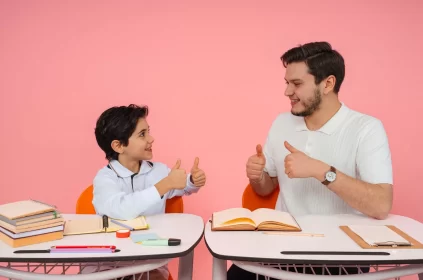
A headmaster who teaches is a school head whose day is spent at the blackboard instead of in the corridor, because the school does not have enough staff for any other arrangement. In 2025–26, 1,00,843 Indian schools had exactly one teacher on the rolls — and that teacher was, by default, also the head. When the same person is the only instructor and the only administrator, instructional leadership does not get done badly. It does not get done at all, because there is no second adult in the building to lead.
Key facts
- 1,00,843 Indian schools ran on a single teacher in 2025–26 — about 3% fewer than the year before — per the Ministry of Education’s UDISE+ 2025–26 report, released July 2026.
- Andhra Pradesh (16,357) and Jharkhand (9,827) have the highest counts of single-teacher schools nationally in that report.
- In 2023–24, single-teacher schools enrolled close to 40 lakh students, an average of 36 children per teacher — well above the national pupil-teacher ratio of 21:1 or better recommended under NEP 2020 (UDISE Plus 2023–24, via Careers360).
- A 2023 UNESCO survey found that more than 60% of teachers in India named non-teaching duties — not classroom demands — as their single biggest source of stress.
- School leadership focused on instruction has three to four times the effect on student outcomes as leadership focused on management or “transformational” style, per Robinson, Lloyd and Rowe’s 2008 meta-analysis of 27 studies in Educational Administration Quarterly — the most-cited empirical basis for the claim that instructional leadership matters more than administrative competence.
What “the headmaster who teaches” actually means
The term describes a specific, countable condition, not a general complaint about overworked staff. UDISE+ — the Ministry of Education’s Unified District Information System for Education, the country’s main public database on school infrastructure and staffing — tracks single-teacher schools as a distinct category precisely because the arrangement changes what a school can do. The national count has been falling: from 1,18,190 in 2022–23 to 1,10,971 in 2023–24 to 1,00,843 in 2025–26. That is genuine progress, and it is also a reminder that six years into UDISE+ tracking, six figures’ worth of Indian children are still taught in schools where the administrator is the only teacher.
When the head is the only teacher, “instructional leadership” is not a weaker version of the job. It is a different job that the role was never designed to do alone.
The pattern concentrates geographically. Madhya Pradesh, Andhra Pradesh, Uttar Pradesh, Jharkhand and Maharashtra each carry thousands of these schools, and the students affected are disproportionately in rural, remote, and low-income areas — the same communities that show up worst on other indicators tracked by UDISE+ and the Annual Status of Education Report (ASER).
Why instructional leadership collapses under a teaching load
Robinson, Lloyd and Rowe’s 2008 analysis is the standard reference point for why headship matters at all: leaders who spend their time on curriculum quality, teacher learning, and classroom observation move student outcomes far more than leaders who are simply well-organised managers. Every practice in that finding — observing lessons, giving feedback, coordinating curriculum across grades, mentoring newer teachers — requires a second adult in the room. A head who is teaching four grades in one space through the school day has no structural way to do any of it, however committed they are.
This is not unique to school leadership. Reporting from The Wire and Careers360 on India’s broader teacher-workload crisis describes the same mechanism at the classroom level: administrative and civic duties — election work, census work, welfare-scheme data entry — pull teachers out of lesson planning and continuity, and the effect compounds in schools that were understaffed to begin with. The Supreme Court of India has directed state governments not to assign teachers non-teaching work outside election and census duty; multiple state reports show that directive is inconsistently followed. A single-teacher school absorbs both problems at once — the staffing gap and the administrative pull — with no one to cover either.
A five-part working framework for these schools
Programmes that have made headway on this problem, in India and in comparable systems, converge on a small set of moves that do not require waiting for a staffing fix.
- Diagnose specifically, not generally. A head who knows which three children in the class are falling behind, and why, can act; a head responding to “learning loss” in the abstract cannot. Where possible, borrow ASER-style oral reading and basic arithmetic checks rather than inventing an assessment from scratch.
- Protect relationships as the improvement lever. School-improvement research consistently finds trust between teacher, student and family predicts gains across subjects, not just the one being taught — which matters more, not less, when one adult is carrying every subject.
- Build in review, not just response. A fixed point to check whether an adjustment worked beats reacting only when a crisis forces the issue.
- Bring in the community as staffing, not just support. Parent volunteers, older students, and local NGOs — Azim Premji Foundation field programmes are one example — can take on supervision and non-academic tasks that would otherwise fall to the head, freeing actual teaching time.
- Start before conditions are ideal. The research on school improvement is consistent that schools which begin with an imperfect plan and adjust it outperform schools waiting for a fully staffed, fully resourced starting point.
Frequently asked questions
Is “single-teacher school” an official category, or an informal term? It is official. UDISE+ reports single-teacher and zero-enrolment schools as distinct, tracked categories in its annual state-wise tables, alongside pupil-teacher ratio and dropout data.
Are single-teacher schools improving or getting worse? Improving, on the national count: down roughly 15% from 2022–23 (1,18,190) to 2025–26 (1,00,843). The decline has not been even across states, and Andhra Pradesh and Jharkhand remain the largest concentrations.
Does a lower pupil-teacher ratio nationally mean this problem is solved? No. India’s national PTR — 10:1 at the foundational level, 21:1 at secondary, per UDISE+ 2025–26 — is an average. It sits comfortably inside a system that still contains over a lakh schools with a PTR of one teacher to the entire school.
Can a single headmaster realistically do both jobs well? The evidence on instructional leadership says the two jobs draw on the same scarce resource — time with students and staff — and that time spent on one is time not spent on the other. The honest goal for these schools is not perfect leadership; it is deliberate triage on which of the five practices above get the time that exists.
What to do:
- Check UDISE+’s most recent state-wise report for your district’s single-teacher and pupil-teacher-ratio figures, and identify the three children in your own classroom most affected by the current staffing gap.
- Speak with one head at a comparable school who is managing this better, and ask specifically what they have stopped doing to make room for what they kept.
- Pull one specific finding from UDISE+, ASER, or Azim Premji Foundation’s published work on leadership and staffing, and share it with your cluster or block resource coordinator this week.
- Put one concrete, small request in writing to your Block Education Officer — a volunteer, a shared teacher, a reallocation of non-teaching duties — rather than an open-ended appeal for more staff.
- Set a review date four weeks out, in writing, to check whether that specific request or change made a measurable difference.
Sources: Ministry of Education, UDISE+ 2025–26 report (via Zee News and DD India, July 2026); UDISE Plus 2023–24 state-wise data (via Careers360, January 2025); Education For All in India, UDISE+ 2021–22 to 2024–25 analysis; Robinson, V. M. J., Lloyd, C., & Rowe, K. (2008), “The Impact of Leadership on Student Outcomes,” Educational Administration Quarterly, 44(5); The Wire, “Administrative Duties Are Stealing Valuable Time from Government School Teachers”; NCSC IAS Delhi, teacher burnout analysis citing a 2023 UNESCO survey.