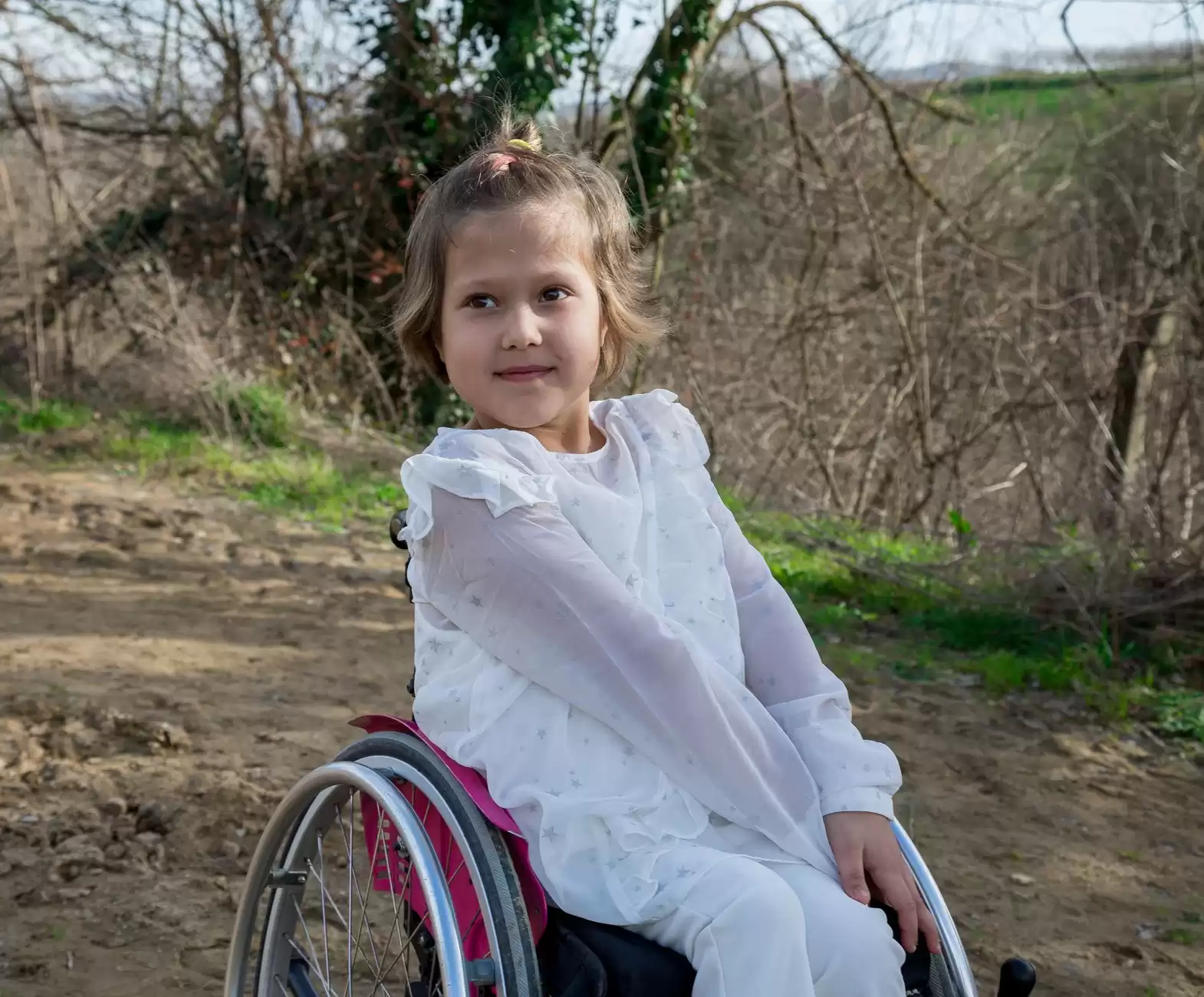
Children with disabilities in Indian schools: the ground truth behind the RPWD Act’s promise
The law guarantees every child with a disability a seat in a neighbourhood school. UDISE+, Census and Supreme Court records show what actually happens once that child tries to walk through the gate.
Arjun Venkataraman | Special education consultant and inclusion researcher
Walk into ten average Indian classrooms and, if disability tracked the national population rate, roughly one child in every 45 seats would have a disability recognised under law. Census 2011 put disability prevalence at 2.21 percent of India’s population. School data tells a different story. UDISE+, the Ministry of Education’s own enrolment database, recorded 2,149,258 children with special needs (CWSN) in its 2024-25 report, released on 28 August 2025, out of roughly 247 million children enrolled nationwide. That works out to 0.87 percent, or about one child in 115. Somewhere between those two numbers sits a very large group of children who either aren’t in school, aren’t being counted, or both.
What does the law actually promise them?
On paper, the promise is substantial. The Rights of Persons with Disabilities (RPWD) Act, 2016, in force since 19 April 2017, requires every government-funded or government-recognised school, private schools included, to admit children with disabilities without discrimination, keep its campus accessible, and give each child individualised support designed to help them progress both academically and socially. Section 17 goes further: it directs governments to survey school-going children every five years to identify disabilities, train enough teachers and staff, set up resource centres, and supply books, learning material and assistive devices free of cost to every child with a benchmark disability up to age 18. Section 31 guarantees free education from age six to eighteen, in a neighbourhood school or a special school of the child’s choosing. The Right to Education Act, 2009, backs this up separately, through Section 2(ee) and Section 3(3), which also allow home-based education for children with severe or multiple disabilities who cannot attend a regular classroom.
None of this is aspirational language. It is statutory text, already in force, already binding on every recognised school in the country, CBSE campuses included.
Why does the promise collapse before it reaches the classroom?
The gap starts with people. In October 2021, the Supreme Court heard Rajneesh Kumar Pandey & Ors vs Union of India & Ors, Writ Petition (Civil) No. 132 of 2016, brought by special education teachers seeking regular, permanent posts instead of yearly contracts. A three-judge bench led by Justice A.M. Khanwilkar recorded that only 120,781 special educators were registered nationwide with the Rehabilitation Council of India, against a government estimate of 2.25 million children with special needs across the country. A separate Census-based estimate put the actual need at closer to 1.5 million special educators. In their submission, the Uttar Pradesh petitioners calculated the state alone would need 73,888 regularly appointed special teachers to reach a five-to-one pupil-teacher ratio for its 369,443 CWSN.
Uttar Pradesh’s own petitioners calculated the state needed 73,888 more special teachers just to reach a ratio the education ministry had already agreed to.
The court ordered the Centre to notify a workable pupil-teacher ratio within six months. By July 2022, the Ministry of Education confirmed to the bench that it had accepted the Rehabilitation Council’s recommended norms: one special educator for every ten children at primary level, and one for every fifteen at upper primary, secondary and higher secondary level, in regular inclusive schools. Two years on, ground reality still lags the ruling. An affidavit Punjab filed before the Supreme Court on 13 October 2023 showed the state had 598 special education teachers in total, just 123 of them regular hires, the rest on contract or working as diploma-holding assistants, serving 47,979 registered CWSN statewide. In Malerkotla district alone, five special education teachers were covering 859 children with special needs spread across 224 schools. Karnataka’s own Association for Special Educators and Staff has put the state’s total special-educator workforce at 1,500 to 2,000, against more than 10,000 in Maharashtra.
Even well-resourced systems fall short until someone forces the issue. In November 2022, the Delhi High Court ordered the Kendriya Vidyalaya Sangathan, which runs 1,255 schools and enrols over 13 lakh students, to hire 987 special teachers. At the time, only around 5,600 children with special needs were studying across the entire KVS network, a small fraction of the system’s overall enrolment, and a sign of how much identification itself depends on whether a school has anyone qualified to do it.
What happens to the children who do get admitted?
Getting a seat is only the first hurdle. Census 2011 found that among children with disabilities aged 5 to 19, 61 percent were currently attending an educational institution, 12 percent had attended in the past and dropped out, and 27 percent had never attended one at all. Among children with mental disabilities specifically, half had never set foot in a school. State figures vary sharply: Jammu and Kashmir counted 80,000 disabled children aged 5 to 19, with only 61 percent in school, while Nagaland recorded the country’s highest share of disabled children who had never attended school, at 39 percent. Literacy tells a similar story of uneven geography. Kerala’s literacy rate among its disabled population stood at 70.8 percent, the highest in the country; Arunachal Pradesh’s stood at 38.8 percent, the lowest. A 2020 analysis in the International Journal of Policy Sciences and Law found that only 9 percent of children with disabilities in India complete secondary school, a steep drop from the 61 percent who are enrolled somewhere at all.
Gender adds another layer. UDISE+ 2024-25 data shows a Gender Parity Index of just 0.731 for CWSN at the elementary level nationally, meaning 693,341 girls were enrolled against 948,715 boys. The ratio is worse in primary classes (0.705) than in upper primary (0.767). A handful of states buck the trend: Arunachal Pradesh actually enrols more disabled girls than boys, with a GPI of 1.202. Most don’t. Goa (0.568), Sikkim (0.594), Haryana (0.632) and Tamil Nadu (0.640) all sit well below the national average, which itself falls short of parity.
What does the research say schools can still do?
Most classroom-level research on inclusion in India has focused on urban, private schools, even though 72 percent of the country’s roughly five million children with disabilities aged 0 to 14 live in rural areas, according to a 2019 UNESCO estimate cited in the research. A 2021 study by Nidhi Singal of Cambridge’s Faculty of Education and Meera Samson, based on interviews and classroom observation in six primary schools across three districts of Haryana, set out to close that gap by examining how ordinary government-school teachers, not specialists, actually understand and respond to disability in their own classrooms. A separate 2025 analysis in JAMA Network Open, drawing on UDISE+ data from 733 districts, found that the mix of disability types varies widely from one district to the next, which argues against treating “children with disabilities” as one uniform group a school can plan for with a single generic response.
None of this requires waiting for the next policy cycle. Section 17(a) of the RPWD Act already asks the government to survey school-going children for disability once every five years; a school doesn’t need to wait for that survey to run its own. Samagra Shiksha, the government’s umbrella school scheme, already funds a transport allowance, a stipend of ₹200 a month for ten months for girls with disabilities, free assistive devices and learning material up to age 18, and a ₹1,200-a-year allocation per child for home-based education where a disability is severe. Most of it goes unclaimed simply because no one at the school level has applied for it on a specific child’s behalf.
What to do
Run a classroom-level identification exercise now, instead of waiting for the government’s next five-year survey. A one-page teacher checklist, filled honestly for every child, usually turns up two or three students no one had flagged before.
Check which Samagra Shiksha entitlements your enrolled CWSN are actually receiving, from the transport allowance to the girls’ stipend to free assistive devices, and file the paperwork for whichever ones have gone unclaimed.
Ask your district education office, in writing, whether your block is meeting the Supreme Court’s pupil-teacher ratio for special educators, ten to one at primary level and fifteen to one above it, and escalate to the State Commissioner for Persons with Disabilities if it isn’t.
Keep a year-on-year completion register for every child with a disability in your school, going beyond a simple admission count, since national data suggests fewer than one in ten reach secondary school, and most of that loss happens quietly, one transfer certificate at a time.
Read Nidhi Singal and Meera Samson’s research on rural government schools in Haryana, share one specific finding with your staff this week, and check back in a month on whether it changed even one lesson.
Sources: UDISE+ 2024-25 Report, Ministry of Education, Government of India · Census of India 2011, disability tables, Office of the Registrar General & Census Commissioner · Rights of Persons with Disabilities Act, 2016, Sections 16, 17, 31 · Right to Education Act, 2009, Sections 2(ee), 3(3) · Rajneesh Kumar Pandey & Ors vs Union of India & Ors, Writ Petition (Civil) No. 132 of 2016, Supreme Court of India (28 October 2021) · The Tribune, reporting on Punjab and Jammu & Kashmir CWSN data (2023) · Nidhi Singal and Meera Samson, “Education of Children with Disabilities in Rural Indian Government Schools: A Long Road to Inclusion,” International Journal of Disability, Development and Education (2021) · Liao, Kumar, Kim and Subramanian, “Disability Among School Children Across Districts of India,” JAMA Network Open (2025)