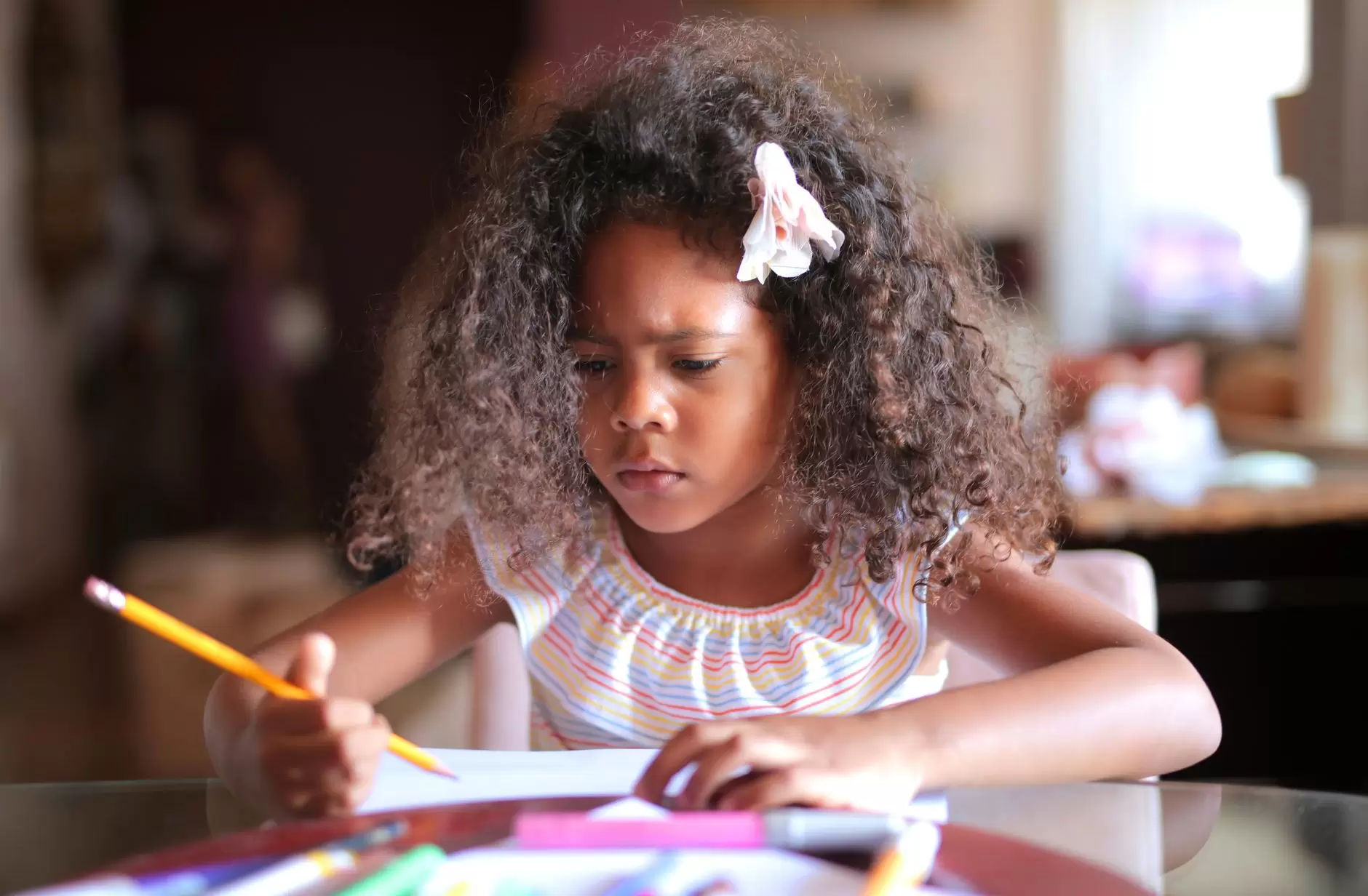
Why does a child refuse to go to school? What the clinical research says, and what Indian schools are now legally required to provide
School refusal is a recognised clinical pattern, not defiance or laziness, and researchers have studied it for decades. A 2025 Supreme Court ruling has now made counsellor access in Indian schools a binding legal requirement rather than a discretionary extra.
Priya Nair | Specialist in curriculum, pedagogy, and school leadership
Christopher Kearney, the psychologist at the University of Nevada, Las Vegas, whose research largely defines this field, describes school refusal behavior as child-motivated refusal to attend school or difficulty remaining in class for a full day, covering everything from chronic lateness to morning meltdowns to attending school but sitting through it in visible dread. In a 2008 review in Clinical Psychology Review, Kearney found that the prevalence of unexcused school absence actually exceeds that of major childhood behavior disorders, and that common symptoms, anxiety, withdrawal, fatigue, crying, and physical complaints like stomachaches, are routinely mistaken for defiance by adults who haven’t been trained to read them differently. That misreading has consequences. Left unaddressed, school refusal behavior is linked to academic failure, social isolation, family conflict, and school dropout.
How is this different from truancy?
The distinction matters because the response has to be different. Truancy is typically driven by a child’s disengagement from school itself, often alongside other behaviour problems, and doesn’t usually come with the distress a refusing child shows. School refusal behavior, in Kearney’s framework, is organised around four possible functions: avoiding something at school that provokes anxiety or general distress, escaping specific social or evaluative situations such as being called on or tested, seeking attention from a parent or other significant adult, or pursuing something more rewarding outside school. A teacher who treats every case as the same problem, requiring the same firmness, will get the diagnosis wrong for a meaningful share of the children in front of them, since the right response to a child escaping classroom evaluation looks nothing like the right response to a child seeking attention at home.
What does the evidence say actually helps?
The clinical literature doesn’t point toward simply insisting a child attend and waiting for compliance. Kearney and Anne Marie Albano’s cognitive-behavioral therapy approach, laid out across a therapist’s guide and a parent workbook now in a third edition, combines cognitive restructuring, modelling, role-play, and graduated exposure, a structured, incremental return to the classroom rather than an all-or-nothing demand. This is specialist territory, not something a classroom teacher is expected to run alone, but knowing that a structured, staged return exists as an evidence-based option changes what a school aims for with a struggling family: not a single dramatic morning of getting a child through the gate, but a documented plan with a counsellor that gets there in steps.
What are Indian schools now legally required to provide?
The Supreme Court’s July 2025 ruling made what many schools had treated as optional, a trained counsellor a child can actually reach, a binding legal requirement for any institution with 100 or more students.
On 25 July 2025, a bench of Justices Vikram Nath and Sandeep Mehta ruled in Sukdeb Saha vs State of Andhra Pradesh & Ors that mental health support in educational institutions is not discretionary. The case reached the Court after the death of a 17-year-old NEET aspirant in Visakhapatnam, and the bench responded with 15 binding guidelines that remain in force until formal legislation replaces them. Every educational institution must adopt a uniform mental health policy, drawing on the government’s own UMMEED guidelines, the Manodarpan initiative, and the National Suicide Prevention Strategy. Any institution with 100 or more students must appoint at least one qualified counsellor, psychologist, or social worker with demonstrable training in child and adolescent mental health; smaller institutions must set up formal referral links to outside professionals instead. Staff must be trained to recognise early warning signs, institutions must document how often these services are actually used, and suicide-prevention helpline numbers, including Tele-MANAS, must be visibly displayed. The Centre has since been reporting compliance back to the Court, with the matter still under active monitoring. None of this replaces clinical treatment for a child showing serious school refusal behavior, but it does mean a school that says it has nowhere to send a struggling child is describing a compliance gap, not a resourcing reality it has no way to change. NCERT’s Manodarpan initiative, running since July 2020, already offers a practical starting point: a national helpline, and a Modular Handbook on Early Identification and Intervention for Mental Health Problems in School Going Children, developed with the Public Health Foundation of India and released in September 2022, specifically written to help teachers recognise the kind of symptoms Kearney’s research describes.
What to do
Ask what a specific child is actually avoiding or seeking before deciding how to respond, using Kearney’s four functions as a working checklist rather than treating every non-attendance case as the same problem.
Confirm whether your school meets the Sukdeb Saha ruling’s counsellor requirement, and if it doesn’t, find out in writing what referral linkage exists in its place, since this is now a binding obligation and not a discretionary courtesy.
Use NCERT’s Manodarpan Early Identification Handbook as a working reference rather than relying on informal judgement alone when a child’s non-attendance doesn’t fit the ordinary pattern of truancy.
Screen for the physical and emotional symptoms Kearney documents, stomachaches, crying, visible dread, before assuming a child’s non-attendance is simple defiance, since the two can look identical from the doorway.
Build a graduated, staged return plan together with a counsellor or referral contact for any child showing sustained school refusal behavior, rather than treating a single successful morning as the goal.
Sources: Christopher A. Kearney, “School absenteeism and school refusal behavior in youth: a contemporary review,” Clinical Psychology Review (2008) · Kearney and Albano, When Children Refuse School: A Cognitive-Behavioral Therapy Approach (Oxford University Press) · Sukdeb Saha vs State of Andhra Pradesh & Ors, 2025 SCC OnLine SC 1515, Supreme Court of India (25 July 2025) · Manodarpan initiative, Ministry of Education, Government of India, and “Modular Handbook on Early Identification and Intervention for Mental Health Problems in School Going Children,” NCERT and Public Health Foundation of India (2022) · National Curriculum Framework for School Education 2023