School of Educators

Blog Post

Belonging as a Learning Condition: Why School Climate Matters More Than Most People Think

Belonging as a Learning Condition: Why School Climate

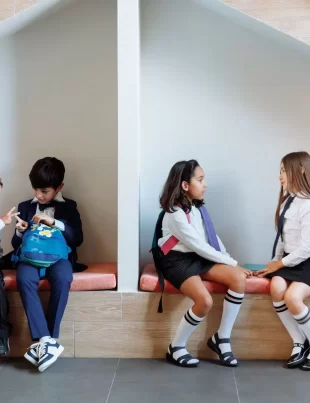
Children who feel they belong in their school — who feel known, safe, and valued — learn more, stay longer,
When a Teacher Notices: Early Identification of Emotional Difficulty and the Non-Clinician’s Role

When a Teacher Notices: Early Identification of Emotional

Teachers are not therapists. But they are with children for six hours a day, five days a week, for ten
The Weight of Examinations: Academic Pressure, Student Wellbeing, and the Schools That Are Finding a Better Balance

The Weight of Examinations: Academic Pressure, Student Wellbeing,

India’s board examinations are among the most high-stakes in the world. The pressure they generate is real, documented, and consequential
Bullying in Indian Schools: What the Research Shows and What Schools Can Do

Bullying in Indian Schools: What the Research Shows

Bullying in Indian schools is underreported, underdiscussed, and often addressed through the wrong interventions. The evidence on what actually reduces
The Child Who Will Not Come In: School Refusal, Anxiety, and What Schools Actually Need to Know

The Child Who Will Not Come In: School

For some children, the anxiety of attending school is not a phase or a tactic. It is a clinical reality
The Multi-Grade Reality: Teaching Two or Three Classes in One Room at One Time

The Multi-Grade Reality: Teaching Two or Three Classes

Over 40% of India’s primary schools are single-teacher schools. The multi-grade classroom is not an anomaly — it is a
The Question That Does Not Wait for an Answer: Rethinking Classroom Talk in Indian Schools

The Question That Does Not Wait for an

In most Indian classrooms, teachers talk for the vast majority of the lesson and children talk very little. The evidence
The Lesson Plan That Never Gets Written: Why Planning Matters and How to Make It Practical

The Lesson Plan That Never Gets Written: Why

Most teachers in India do not write lesson plans in any useful form. The evidence is clear that planned lessons
Teaching Reading, Not Teaching About Reading: Explicit Phonics and the Foundational Literacy Crisis

Teaching Reading, Not Teaching About Reading: Explicit Phonics

Millions of Indian children complete primary school without learning to read fluently. This is not because they lack intelligence. It
What the Back Row Is Telling You: Formative Assessment and the Daily Diagnostic Teacher

What the Back Row Is Telling You: Formative

The most useful information about whether children are learning is generated inside the classroom, every lesson — and most of